
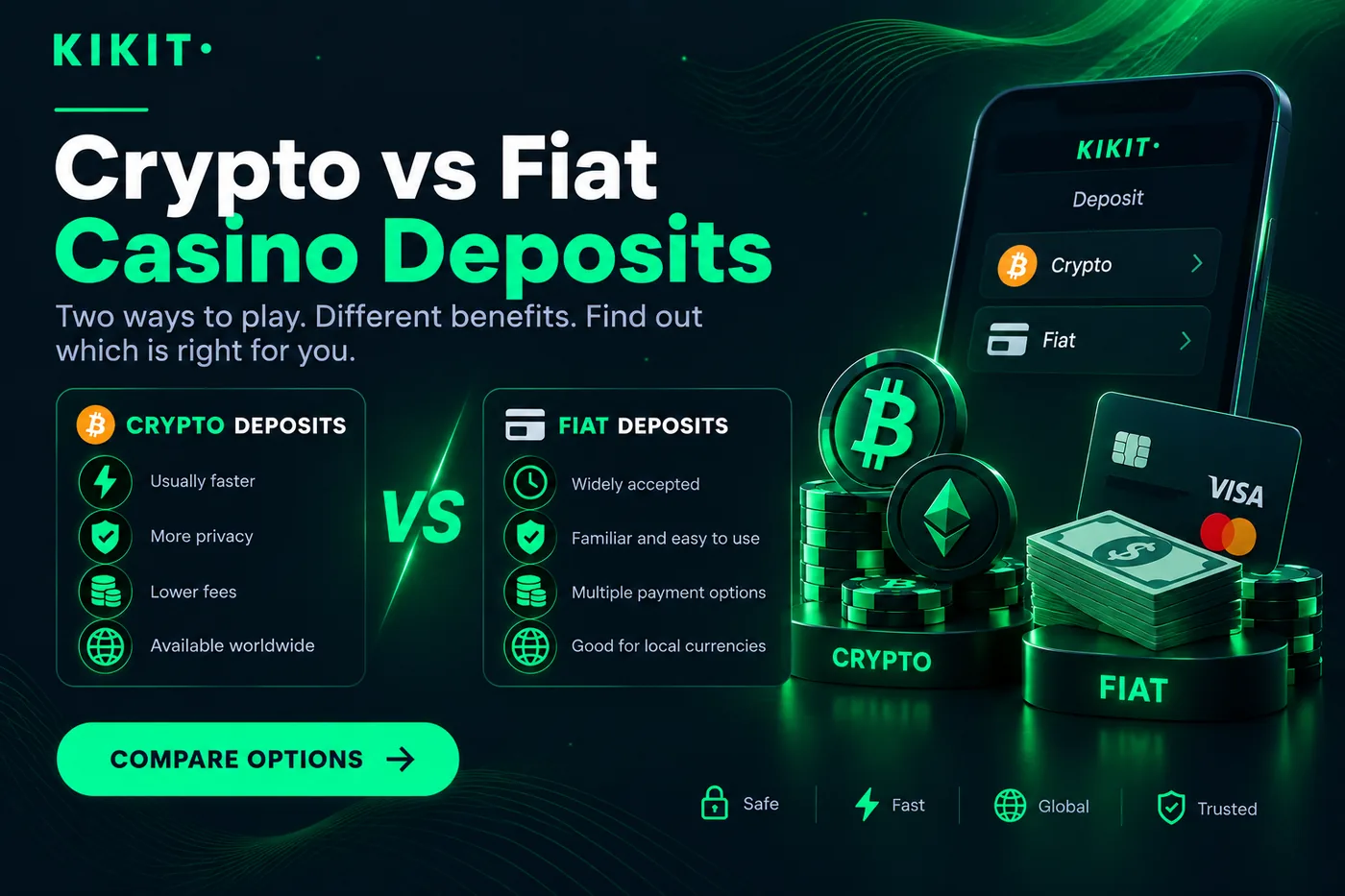
What crypto actually solves
Crypto casinos exist because a real subset of players want fewer intermediaries between their money and the game. When it works, a deposit takes one block confirmation and a withdrawal takes one more. There is no bank blocking a gambling merchant, no card issuer flagging the transaction, and no e-wallet holding funds for review.
Speed: crypto by a wide margin
USDT on the Tron network confirms in under 30 seconds and costs a fraction of a cent. Bitcoin needs 10 minutes for one confirmation, still faster than a card refund. Even a slow chain beats waiting for a Skrill withdrawal to reach the wallet, then another day to reach the bank. If cash-out speed is the priority, crypto wins.
Volatility: fiat wins by default
A BTC deposit at €55,000 that you play through and cash out three days later can be worth €51,000 or €58,000 by the time it lands back in your wallet. Some casinos let you deposit in crypto but play in stablecoin balance, which sidesteps this. Stablecoins (USDT, USDC) hold their peg well and deliver the crypto benefits without the price roulette.
Privacy: crypto is not anonymous
Every blockchain transaction is public. Casinos still require KYC to comply with AML regulations. What crypto does protect against is your bank knowing you gamble. If that matters (self-employed with a mortgage in progress, for example), crypto is the practical choice. If you assume the transaction chain itself is private, you are wrong.
Fees: not always the crypto win people expect
Tron and Polygon are almost free. Ethereum can cost €5 to €15 in network fees during busy periods. Bitcoin is €2 to €8. Fiat e-wallets are usually free at gambling operators. For small deposits, an e-wallet often wins on total cost; for big amounts, crypto network fees become trivial percentages.
Consumer protection: fiat still ahead
Card and bank transactions carry chargeback and complaint rights. Crypto transactions are final. If a casino refuses to pay a legitimate win, you have the licence regulator as your only recourse, and no bank-side dispute mechanism. This is why crypto casinos should be held to a higher initial vetting standard, not a lower one.
Practical picks
Deposit stablecoin (USDT or USDC on Tron or Polygon) for the best all-round trade-off: fast, cheap, price-stable, privacy-friendly. Reserve BTC for larger amounts where the volatility is a feature not a bug. Reserve fiat for regulated licensed markets where consumer protection matters more than speed.
Frequently asked questions
Are crypto casinos legal in my country?
It depends on the licence the operator holds, not the coin itself. In markets with a strict local licence (UK, Sweden, Netherlands, Germany), crypto casinos operating on offshore licences are usually not permitted. In grey-market jurisdictions they operate freely. Check your local regulator.
Do I have to declare crypto gambling winnings?
In most tax jurisdictions, gambling winnings are treated the same regardless of denomination. If your country taxes gambling wins, converting from crypto to fiat is a taxable event on the crypto side even if the gambling side is exempt. Consult a local accountant.
Can I get scammed by a "crypto casino" faster than a normal one?
Yes. The finality of crypto transactions means any scam takes 100 percent of what you sent, and there is no chargeback. Verify licence, ownership and complaint history before your first deposit, same as any casino, but treat it as more urgent for crypto.